
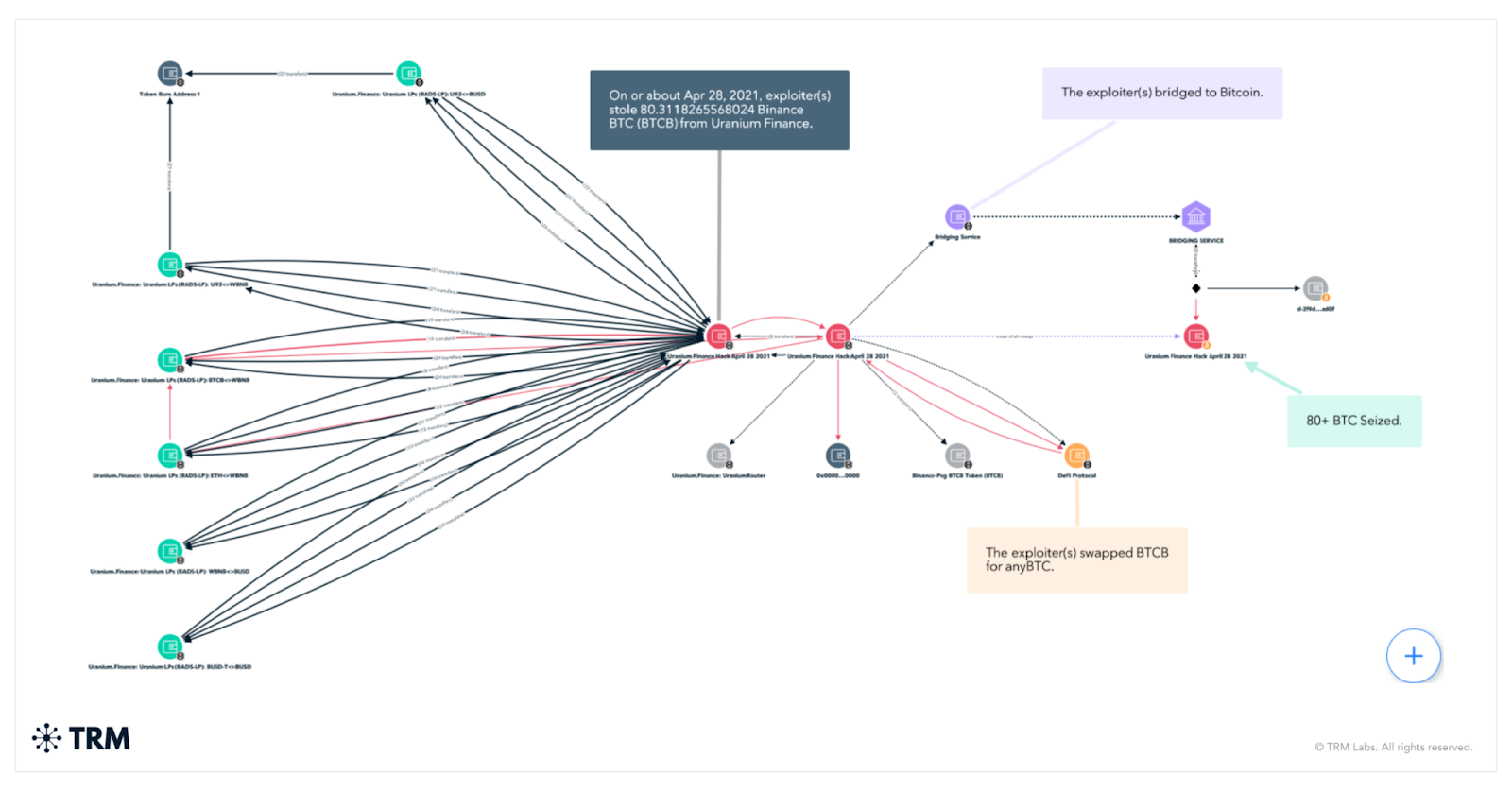


U.S. authorities have made a significant breakthrough in the case of the 2021 cyberattacks on Uranium Finance by recovering $31 million in stolen cryptocurrency. The decentralized finance platform, built on Binance’s BNB Chain, was targeted in two separate attacks in April 2021, resulting in a total theft of $53.4 million.
The first attack, which took place from April 6-8, resulted in the theft of $1.4 million, with $1 million later recovered. The second attack, on April 28, exploited a code error in the platform, leading to the theft of $52 million. The stolen funds were then laundered through the cryptocurrency mixer Tornado Cash and decentralized exchanges, with some remaining dormant for years before resurfacing in early 2024.
With the assistance of the blockchain intelligence firm TRM Labs, U.S. authorities were able to track and recover a portion of the illicit financial flows linked to the cyber heist. The U.S. Attorney’s Office (SDNY) and HSI San Diego were able to seize $31 million in stolen assets, marking a major success in the investigation into the Uranium Finance case.
TRM Labs worked closely with law enforcement to trace the movement of the stolen assets across multiple blockchains, identifying key laundering patterns and generating actionable intelligence. This collaboration ultimately led to the successful seizure of the $31 million in February 2025.
The seizure of the stolen assets highlights the growing capabilities of law enforcement in tracking and recovering stolen cryptocurrency, even years after a cyberattack. It serves as a warning to cybercriminals that blockchain intelligence tools are advancing, making it increasingly difficult to hide illicit funds. The case also emphasizes the importance of robust security measures in decentralized finance platforms, as even minor code flaws can result in significant financial losses. Despite the evolving tactics used for laundering stolen assets, law enforcement agencies are demonstrating that these funds can still be traced.
This successful operation underscores the importance of collaboration between government agencies, law enforcement, and private sector companies in combating cybercrime and recovering stolen assets. It also serves as a reminder to individuals and organizations to remain vigilant and take proactive steps to protect their digital assets in an increasingly interconnected and vulnerable online environment.