
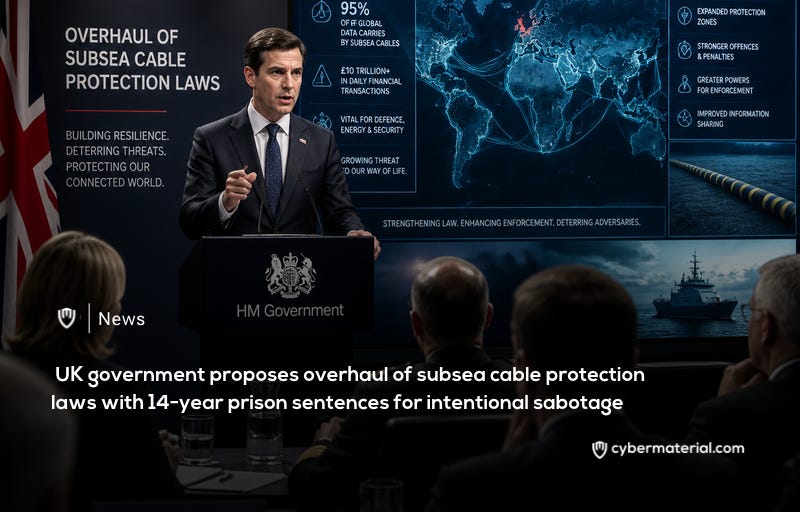


UK Proposes Tougher Penalties for Sabotage of Subsea Infrastructure
The United Kingdom has announced ambitious plans to modernize its legal framework surrounding the protection of subsea cables and pipelines, aiming to impose prison sentences of up to 14 years for individuals found guilty of intentionally sabotaging this critical underwater infrastructure. Currently, the Submarine Telegraph Act of 1885 offers a mere £100 maximum fine for damages caused by negligence, a figure that reflects a time when telegraph technology was in its infancy.
The proposed legislation is particularly timely, coinciding with increasing concerns regarding hostile state activities occurring near British infrastructure. In April 2024, British military forces made headlines when they uncovered a Russian submarine operation that involved a decoy attack submarine. This operation was reportedly designed to mask two specialist vessels surveilling the routes of Britain’s subsea cables. These cables play a crucial role in the UK’s international communications, serving as the conduits for approximately 99 percent of the nation’s data traffic. Similarly, underwater pipelines are vital as they supply 74 percent of the UK’s gas, making them prime targets for potential attacks.
Under the proposed legislation, subsea telecommunications operators would be compelled to not only identify but also manage various security risks associated with their operations. The legislation will empower ministers with the authority to direct these companies and cable repair services to undertake protective measures to ensure national security when deemed necessary. One of the more innovative aspects of this framework includes plans to regulate fiber-optic sensing technology, which would be utilized in subsea cables for detecting maritime activities. This is in response to growing worries that sensitive information could be compromised and fall into the hands of hostile entities.
These initiatives further elaborate on intentions that were laid out in May 2024 and are closely tied to warnings issued by Parliament’s Joint Committee on the National Security Strategy, highlighting the urgency of enhancing national security measures. However, despite the preoccupation with state-sponsored threats, it is noteworthy that fishing boats and ships causing accidents while dragging anchors account for up to 97 percent of cable faults, as per government estimates. Last year, various parliamentary committees flagged concerns that the UK was focusing excessively on isolated cable failures rather than the potential of coordinated attacks aimed at simultaneously targeting multiple connections.
Though existing laws already impose life sentences for severe instances of state-backed sabotage, the enforcement of these laws remains fraught with challenges, particularly when incidents occur in the complex and often murky waters at sea, making attribution of responsibility difficult. The legal initiatives announced also underline a gap in the current legal framework that may not adequately address the evolving threats posed by both state and non-state actors in maritime environments.
To facilitate public and stakeholder input, the government has initiated a 12-week consultation period regarding these proposals before finalizing any legislative measures. Security experts have pointed out that while imposing harsher penalties may have limited effects on deterring foreign military operations, the proposed legal framework serves to clarify authority and obligations for protective actions and operator responsibilities in the subsea domain. However, the practical implications of prosecuting suspected perpetrators from adversarial nations remain a significant hurdle, especially considering the complexities involved in collecting evidence in deep-water environments.
In summary, the UK’s move to overhaul its subsea infrastructure protection laws reflects recognition of the critical nature of these assets and the pressing need to guard against a range of threats. As data traffic and energy supplies remain vulnerable, the government’s initiative underscores the importance of securing these essential lifelines against an increasingly unpredictable global landscape.
For further details, interested individuals can consult the source here.