


Microsoft Alerts Users to AI-Driven Cryptojacking Campaign
Microsoft has recently issued a warning regarding an active cryptojacking campaign that exploits interactions with artificial intelligence (AI) chatbots. This sophisticated operation serves to lure unsuspecting users into downloading malware disguised as legitimate software, thus exposing them to significant cyber threats.
According to a report from the Microsoft Defender Security Research Team, the campaign employs an innovative delivery technique that transcends conventional social engineering tactics. By manipulating search engine results, threat actors are able to enhance the visibility of malicious software, making it more likely for users to inadvertently download harmful applications.
The primary objective of this campaign is to target users who possess high-performance graphics processing units (GPUs). Cybercriminals are impersonating well-known system utilities such as CrystalDiskInfo, HWMonitor, Display Driver Uninstaller, FurMark, K-Lite Codec Pack, and PDFgear. This targeted approach aims to compromise systems that are more vulnerable to GPU mining, ensuring a higher return on investment compared to indiscriminately infecting a wide array of machines.
Beyond financial motivations, the campaign also aims to establish persistent remote access to affected systems. Through the deployment of ScreenConnect, a remote access software, cybercriminals can further exploit compromised hosts for activities such as data theft, lateral movement across networks, or even deploying ransomware. This more calculated attack chain starkly differs from typical cryptocurrency mining endeavors, focusing on select endpoints to maximize the potential for mining yield.
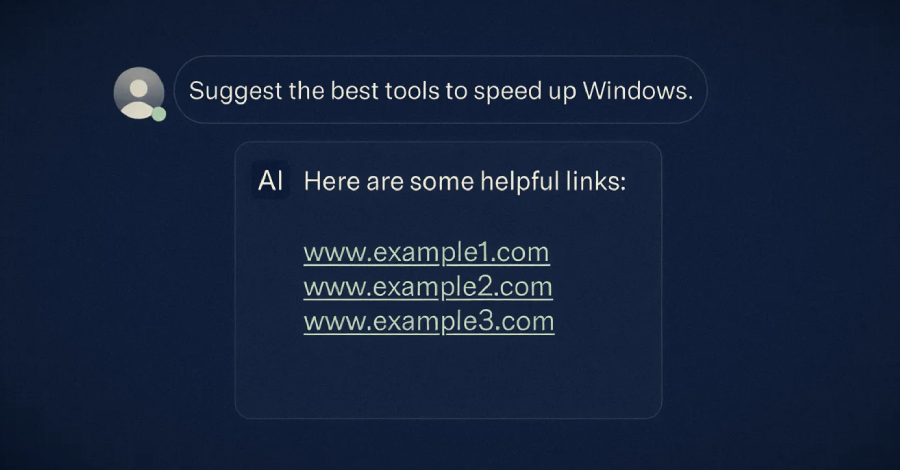
The chain of attacks begins as users search for reliable system utilities and hardware-monitoring software. These queries lead them to malevolent websites that employ tactics like search engine optimization (SEO) poisoning, designed to hijack legitimate search results. More recent developments have illustrated that users are being directed not only through traditional search results but increasingly through large language model (LLM)-based tools, such as AI chatbots.
Microsoft reported that in these cases, users who solicit AI chatbots for software recommendations often receive links to domains controlled by attackers. This deceptive practice represents a significant evolution in AI search result poisoning and marks an extension of traditional SEO manipulation techniques. Each malicious website contains prominent download buttons that lead users to download a ZIP archive from specific subdomains, hosted by infrastructure associated with Dynu, a dynamic DNS provider favored by threat actors. A staggering 150 malicious domains have already been identified in connection with this campaign.
The downloaded ZIP file typically includes a legitimate executable alongside a malicious Dynamic Link Library (DLL) named “autorun.dll.” When executed by the user, this rogue DLL is designed to install another DLL known as “vcredist_x64.dll,” which sets the stage for deploying ScreenConnect software. Once fully installed, the ScreenConnect client will persistently attempt to connect to an attacker-operated server.
In some situations, instead of utilizing the file transfer functionality of ScreenConnect to deliver the mining binary, attackers have opted to use PowerShell scripts. Such scripts fetch the malicious binary from a remote drive, name it “vlc.exe” to avoid detection, and create a scheduled task for its execution before self-deleting.
The hollowed-out binary then establishes a connection to the attacker’s server where it transmits detailed host information and downloads a miner archive at runtime. The malware supports three miner programs: gminer, lolMiner, and SRBMiner-MULTI. Additionally, it generates persistence artifacts to ensure continued access to the compromised system, while also actively monitoring for security software interference.
Should any security applications or monitoring tools, such as Windows Task Manager or Process Hacker, be detected, the miner is programmed to terminate immediately. This highlights the level of sophistication the threat actors have employed, focusing on circumventing established security measures.
Microsoft underscored that the combination of AI-driven delivery methods, software impersonation, and persistent access highlights the adaptive nature of these cybercriminals. They are increasingly leveraging social engineering tactics and modern user behaviors to monetize their malicious activities.
The recent disclosures follow a pattern of sophisticated attacks targeting organizations. Earlier this month, Microsoft revealed an incident involving an attacker who gained initial access through a compromised F5 BIG-IP firewall appliance. This situation reflects a growing trend of exploiting internet-facing edge devices to infiltrate deeper into organizational networks.
As the cyber landscape evolves, Microsoft emphasizes the necessity for organizations to validate their interactions with third-party service providers and integrated management tools. Visibility and verification of behavior within these environments are essential for maintaining a robust security posture. Organizations in sensitive sectors should be particularly vigilant, as the risks posed by over-privileged identities and evolving threat actor strategies continue to grow.
In conclusion, as cryptojacking campaigns become increasingly sophisticated, it is paramount that users remain alert. Recognizing the signs of deceit and exercising caution when engaging with AI tools and downloading software can significantly mitigate the risks associated with such attacks. Microsoft’s insights serve as a vital reminder of the necessity for proactive security measures in an era where digital threats are ever-present and evolving.